
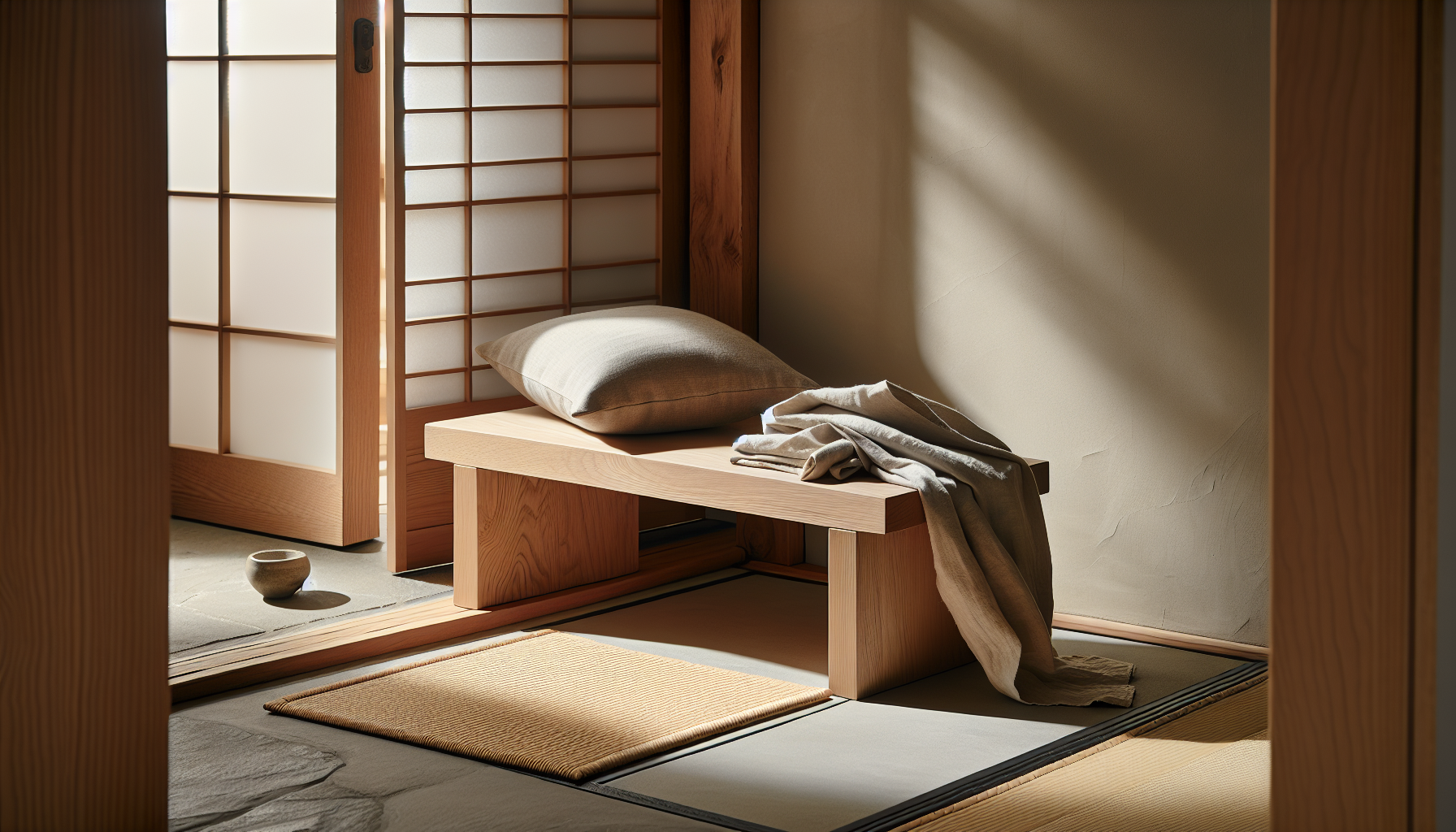
Have you ever wanted your rooms to feel like they naturally belong together without losing their individual purpose?
Japandi transitions for seamless interior spaces
Japandi combines Japanese minimalism and Scandinavian functionality to create interiors that feel calm, curated, and comfortable. You’ll notice that the most successful Japandi homes use transitions — the moments between rooms, materials, light, and function — to maintain visual continuity while supporting different activities. This article walks you through the most important transitions and gives practical guidance so you can apply them in your own space.
Why transitions matter in Japandi design
Transitions are the connective tissue of your home. They determine how you move, how your eye travels, and how mood shifts from one area to another. In Japandi design, transitions should be intentional, simple, and sensory-aware so each space feels related yet distinct. When transitions work well, you get a calm flow that supports daily life without visual clutter.
Core principles that guide Japandi transitions
Understanding a few core principles helps you make purposeful decisions. Keep these in mind as you plan each transition.
- Simplicity: You’ll prioritize clean lines and uncluttered surfaces to keep transitions visually quiet.
- Natural materials: Wood, stone, textile, and paper create warmth and tactile interest across spaces.
- Contrast and balance: You’ll balance light and dark, rough and smooth, warm and cool to create subtle hierarchy.
- Function-first thinking: Transitions support the activities in each space rather than being purely decorative.
- Mindful restraint: You’ll aim for intentional choices and avoid unnecessary ornamentation.
What are the most important transitions between Japandi spaces?
You’ll need to think about several types of transitions that influence how seamless your interiors feel. The most important are: spatial flow, visual/material continuity, thresholds and openings, lighting, color palette, flooring and level changes, texture and tactile transitions, furniture scale and alignment, acoustic changes, and seasonal or functional adaptations.
Each of these areas controls a specific experience: movement through the home, the way materials lead the eye, how light signals a change in use, and how you physically interact with surfaces and furnishings.
Spatial flow and circulation
Spatial flow refers to how you move through your home and perceive the sequence of spaces. You should plan routes that feel natural and unobstructed while allowing moments of pause.
- Keep main circulation paths clear of large furniture and visual interruptions.
- Use furniture placement to subtly guide movement — orient sofas, rugs, and consoles to imply direction without building walls.
- Consider sightlines: Align openings so you can see into the next area and anticipate what’s coming.
Visual and material continuity
Visual continuity ties rooms together using repeated materials, shapes, and lines. This doesn’t mean everything must match; it means that you use a limited palette so transitions feel intentional.
- Repeat core materials, such as oak and linen, in multiple spaces but vary finishes and proportions.
- Use consistent joinery details or trim profiles to create a subtle language across rooms.
- Anchor each room with a signature element (a pendant light, a wooden console, a shoji screen) that references the whole home.
Thresholds and openings
Thresholds — doorways, sliding screens, and open arches — are prime places to design transitions. They define the edge between one activity and the next.
- Use soft thresholds like sliding doors or curtains to blur separations while providing privacy.
- Raised thresholds or material shifts can signal a change in use (for example, from a living area to a tatami nook).
- Minimal frames and slim profiles keep thresholds understated and in line with Japandi restraint.
Lighting transitions
Light sets mood and helps your brain register a new zone. You should layer lighting so that intensity and color temperature change thoughtfully between areas.
- Layer ambient, task, and accent lighting to create depth and utility.
- Use warmer, dimmable lighting for intimate zones and brighter, cooler lighting for task areas.
- Consider natural light pathways: use screens and blinds that modulate daylight rather than block it entirely.
Color palette and tonal transitions
Color controls emotional shifts between spaces. Japandi favors a muted, limited palette, but you can use tonal changes to differentiate rooms subtly.
- Keep a base palette of neutrals (cream, warm white, soft gray) and introduce accent tones (muted blue, olive, warm black).
- Transition with steps: move from light to mid-tone to dark across a sequence of rooms to create a soft progression.
- Use color in textiles and small furnishings rather than walls to keep transitions reversible.
Flooring and level changes
Flooring is one of the most tactile and visible transitions. You’ll want it to support both aesthetics and practical movement.
- Use continuous flooring in open-plan areas to maintain flow; change material where functions shift.
- Favorite Japandi flooring combinations: warm oiled oak with natural stone at thresholds, or charcoal concrete near functional zones.
- When levels change (a raised platform, a sunken seating area), use subtle steps, integrated lighting, or a change in grain orientation to make transitions safe and legible.
Texture and tactile transitions
Texture keeps a space feeling human and inviting. You’ll layer smooth and rough surfaces to create contrast that’s experienced physically.
- Alternate tactile zones: polished wood table against a linen sofa and a stone hearth.
- Use textiles (rugs, cushions) to soften hard transitions, especially in high-traffic zones.
- Keep texture scale consistent: don’t pair extremely coarse materials next to superfine ones without an intermediate surface.
Furniture scale and alignment
Furniture informs sightlines and movement. Proper scale and alignment maintain visual calm and ensure transitions aren’t jarring.
- Choose furniture in proportion to room size and keep heights varied but not random.
- Align major furniture pieces with architectural lines — windows, beams, or openings — to create coherence.
- Use open, low-profile forms to keep sightlines through spaces, especially in smaller homes.
Acoustic transitions
Sound affects your perception of privacy and comfort. In Japandi spaces, you’ll tame echo without sacrificing minimalism.
- Introduce soft surfaces (rugs, curtains, upholstery) to absorb sound, particularly in harder-surfaced areas.
- Use built-in storage and shelving with backed panels to break up reverberation.
- Consider acoustic panels with natural textiles or wood slats that blend with the aesthetic.
Seasonal and functional adaptations
Your home should adapt as your needs and the climate change. Thoughtful transitions support seasonal living and multifunctional spaces.
- Use removable textiles and light layers in summer, and heavier throws and rugs in winter.
- Implement flexible furnishings — foldable screens, nesting tables, and sliding doors — to shift usage without major renovation.
- Think about ventilation and sun direction so spaces feel comfortable across the year.
Material pairings that work in Japandi transitions
Using combinations of materials that contrast yet harmonize is central to successful transitions. This table will help you pair materials logically.
| Primary Material | Complementary Material | Where to Use |
|---|---|---|
| Warm oiled oak | Paper or woven textile (shoji, mats) | Flooring to wall accents, cabinetry to screens |
| Ash or beech wood | Matte black metal | Furniture legs, hardware, lighting fixtures |
| Natural stone (limestone, granite) | Warm plaster or clay | Kitchen backsplash to adjacent wall finish |
| Polished concrete | Soft wool or linen textiles | Entry thresholds to seating areas |
| Wabi-sabi ceramic | Smooth glazed surfaces | Shelving displays, tabletop to cabinet contrast |
| Bamboo or rattan | Dark-stained wood | Light fixtures, seating to structural beams |
| White plaster | Natural oak trim | Walls to window frames and baseboards |
Referencing this table, you’ll create transitions that feel coherent because the materials speak the same language: quiet, textured, and honest.
Practical strategies for specific transitions
Below are actionable methods you can apply room-by-room or for particular junctions.
Entry to living area
Your entry sets expectations. It should offer a moment of calm while directing you toward the main living space.
- Use a durable flooring like stone or tile at the entry and transition to wood within a step or gentle change in material.
- Provide a low bench and woven basket for shoes and outerwear; these functional objects reinforce the Japandi emphasis on purposeful items.
- Keep wall finishes simple; a single pendant or wall sconce can create a focal point without clutter.
Living room to dining area
The living and dining areas often coexist; transitions should support shared use while defining dining as an activity zone.
- Use a rug under the seating and a different rug under the dining table to delineate zones without walls.
- Align the dining table perpendicular to the sofa to encourage flow and conversation.
- Use complementary lighting — a low pendant over the table and softer ambient light in the living area — to signal functional change.
Kitchen to adjacent spaces
Kitchens have practical requirements; your transitions should manage durability and visual warmth.
- Use a continuous backsplash material where practical to reduce visual breaks.
- Consider a slightly different countertop edge or finish at the boundary to indicate change of use.
- Open shelving with carefully arranged ceramics helps carry the kitchen’s materiality into the adjacent space.
Bedroom transitions
You’ll want restfulness and privacy. Transitions into bedrooms should be soft and quiet.
- Use softer lighting and layered textiles at the entrance to create an immediate sense of calm.
- For small apartments, use a sliding screen or low shelving as a divider that keeps light while offering separation.
- Keep color transitions gentle — slightly deeper wall tone or darker wood trim to cocoon the space.
Bathroom to bedroom or hallway
Bathrooms require waterproof materials but you can keep the transition warm and connected.
- Use a threshold tile band or a walnut strip to create a clean, hygienic edge while referencing the home’s wood tones.
- Allow natural light to carry into the bathroom where possible; frosted glass helps preserve privacy.
- Keep fixtures minimal and finishes matte for low-reflection, calming surfaces.
Threshold design options and when to use them
Thresholds can be subtle and functional. Here’s a quick guide to options and their ideal contexts.
| Threshold Type | Visual Effect | Best For |
|---|---|---|
| Continuous floor | Seamless flow | Open-plan living, small homes |
| Material band | Clear but subtle demarcation | Between different functions (kitchen/dining) |
| Raised platform/step | Distinct separation, cozy zone | Tatami areas, sunken seating |
| Sliding screen (shoji) | Soft privacy, filtered light | Bedroom entries, multi-use rooms |
| Full door with slim frame | Privacy and sound control | Bathrooms, bedrooms |
| Rug or textile band | Temporary, soft transition | Rental spaces, seasonal changes |
Use these options based on how permanent and visible you want the transition to be.
Lighting sequencing: practical tips
Good lighting sequencing helps the eye and body adjust between areas. Use these tips to plan intensity, temperature, and control.
- Dimming is your friend: put key circuits on dimmers to control mood and adjust transitions by time of day.
- Use warmer temperatures (2700–3000K) for living and sleeping areas and slightly cooler (3000–3500K) for kitchens and workspaces.
- Place task lights where needed and avoid over-illuminating adjacent zones; lighting contrast should be soft, not stark.
- Consider layered windows treatments — sheers for daylight diffusion, heavier curtains for privacy — to tune natural light transitions.
Color transition palettes with examples
Designing a transition in color can be done in steps. Below are three palette progressions you can adapt.
- Neutral progression: Soft cream → Warm gray → Deep charcoal. Use cream on major walls, gray on adjacent rooms or cabinetry, and charcoal as accent or occasional furniture.
- Earth progression: Light sand → Muted olive → Rich walnut. Apply sand on open-plan areas, olive on a study or reading nook, walnut for joinery and larger furniture.
- Cool-warm progression: Cool pale blue → Warm beige → Black-beige contrast. Use blue for a calming bathroom or bedroom, beige for living areas, and black-beige contrasts as hardware or framing elements.
These steps create gentle visual shifts rather than abrupt color changes.
Joinery and built-in transitions
Joinery unites rooms through craftsmanship. Thoughtful built-ins can bridge functions smoothly.
- Use consistent joinery details: recessed handles, exposed dovetail shelves, or slotted supports across kitchen, study, and living areas.
- Built-ins can act as partial dividers — a low bookcase with a continuous wood top can mark a transition while providing storage.
- Keep finishes natural and matte to maintain tactility and understated elegance.
Flexible partitions and multi-use strategies
Many modern homes need spaces to perform multiple roles. Japandi solutions favor flexibility that’s quiet and elegant.
- Sliding doors or shoji screens allow you to open or close off areas without heavy visual frames.
- Folding or nesting furniture helps you convert a dining area to a workspace or a guest sleep spot to a living area.
- Consider movable storage units on castors with low profiles that can form temporary partitions.
Plant and nature transitions
Plants are subtle but powerful transition elements that add life and a textural bridge between materials.
- Use potted plants at thresholds to soften hard edges and to highlight change in use.
- Choose plant sizes appropriate to the movement path — low moss bowls for shelves, medium potted palms near entrances.
- Integrate planter boxes into low partitions or window sills to continue the natural motif through rooms.
Common mistakes and how to avoid them
It’s easy to get transitions wrong. Here are frequent mistakes and corrective actions.
- Too many competing materials: Limit your palette to three primary materials and repeat them to maintain cohesion.
- Abrupt shifts in scale: If a large raw concrete floor meets delicate furniture, introduce an intermediate wood or textile to ease scale.
- Overuse of pattern: Keep patterns minimal and confined to textiles or small accessories rather than broad surfaces.
- Under-lighted thresholds: Add modest lighting to doorways and steps to ensure safety and visual clarity.
- Ignoring acoustics: Add rugs and soft furnishings where sharp echoes occur, especially in long open corridors.
Step-by-step process to plan transitions in your home
Follow this practical sequence to make considered transition decisions.
- Map the main circulation paths and primary sightlines.
- Identify key functions for each room and their intensity (active, passive, restorative).
- Select a limited material palette and determine where each material will be used.
- Plan lighting zones and control strategies (dimmers, layered lighting).
- Choose threshold treatments that match function and budget (continuous floors, bands, screens).
- Test furniture layout to verify scale and sightlines, then adjust.
- Add textiles and plants as soft transition elements.
- Review acoustics and introduce soft surfaces where needed.
- Fine-tune color transitions using samples under natural light.
- Live with the solution for a few weeks, then adjust flexible elements (rugs, screens, lighting).
Case study examples (conceptual)
Below are conceptual examples to illustrate ideas you can adapt.
- Small apartment: Use continuous warm oak flooring to visually enlarge the space. Differentiate kitchen with a narrow stone band at the entrance. Install a sliding shoji between the sleeping area and living area for privacy without blocking light.
- Family home: Define the dining area with a slightly darker plastered recess and a low pendant; keep living room walls lighter. Use built-in storage as a partial divider between play area and living room, topped with a wood bench to signal a change of use.
- Renovated townhouse: Raise a small tatami platform in a former bay window area for a contemplative nook, using a single step and integrated lighting to create a threshold that feels ceremonial yet subtle.
Maintenance and long-term care of transitions
Sustainable transitions are durable and easy to maintain. Choose finishes and joints that age well.
- Oiled woods can be refreshed over time; prefer oils over polyurethane for touch-up simplicity.
- Use natural fiber rugs in high-traffic transitions; they can be rotated and aired to reduce wear.
- Select washable textiles for cushion covers and draperies in zones that handle grime or moisture.
- Keep metal hardware simple and replaceable to allow for small updates instead of full overhaul.
Checklist: quick reference for successful Japandi transitions
Use this checklist when planning or evaluating transitions.
- Clear and unobstructed circulation path
- Limited material palette repeated across spaces
- Strategic lighting with dimming and layered control
- Appropriate threshold treatment for privacy and function
- Scaled furniture that respects sightlines
- Textures layered to balance hard surfaces
- Acoustic treatments in reflective zones
- Flexible elements for seasonal and functional shift
- Natural elements integrated at transitions
- Maintenance plan for materials and finishes
Final thoughts: making transitions feel effortless
You’ll create seamless Japandi interiors by thinking of transitions as intentional design decisions rather than afterthoughts. By aligning materials, light, scale, and function with a restrained aesthetic, you’ll compose a home that feels cohesive and calm. Start small: change a rug, swap a pendant, or introduce a sliding screen, and see how a single transition can alter how your home feels from one room to the next.
If you want, you can tell me about a specific transition you’re planning — the rooms involved, your materials, and any constraints — and I’ll give tailored suggestions to make it feel more seamless.