
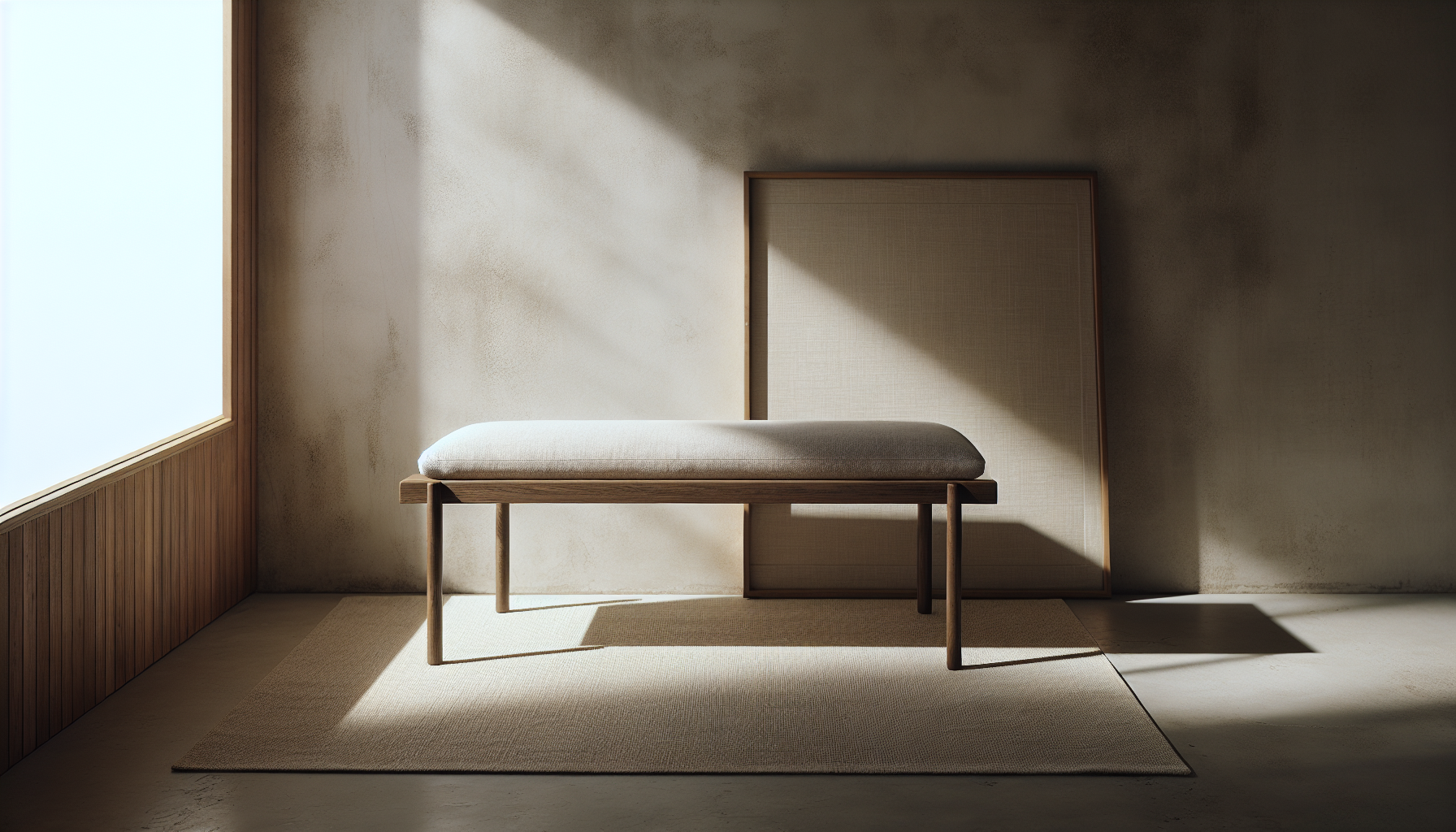
Have you ever wondered how Japandi treats furniture scale in small spaces to make rooms feel both spacious and soothing?
Japandi approach to furniture scale in small spaces
This article explains how Japandi—an aesthetic that combines Japanese minimalism and Scandinavian functionality—approaches furniture scale specifically for small spaces. You’ll learn practical guidelines, room-by-room recommendations, and design strategies to help you choose and place furniture so your small space feels balanced, airy, and intentional.
What you’ll get from this article
You’ll get clear, actionable principles and measurements you can apply right away. The goal is to help you make choices that respect Japandi values—simplicity, proportion, natural materials, and calm—while solving the constraints of small living areas.
What is Japandi and why scale matters
Japandi blends Japanese aesthetics (refinement, wabi-sabi, understated elegance) with Scandinavian design (functionality, lightness, coziness). In small spaces, where every item competes for attention, furniture scale becomes a central tool for achieving that signature calm.
You’ll find that scale is about more than size—it’s about proportion, negative space, sightlines, and how pieces relate to each other and the room.
Core Japandi principles relevant to scale
Japandi relies on simplicity, balance, natural materials, and careful craftsmanship. These principles guide furniture choices so you prioritize proportion and restraint over ornamentation.
You’ll use these principles to decide what to keep, what to resize, and how to layout furniture to preserve clarity and flow in small rooms.
Understanding furniture scale
Furniture scale refers to the size of pieces in relation to the room and to one another. In a small space you must weigh multiple scaling decisions: absolute size, visual weight, and proportion.
You’ll need to consider both physical dimensions and perceived scale—how heavy or light a piece looks in context.
Absolute vs. perceived scale
Absolute scale is the physical measurement; perceived scale is how the piece reads in the room. A bulky sofa with thin legs might appear lighter than a low, boxy sofa without legs. You should balance both when selecting items.
You’ll find that perceived scale can be controlled through materials, leg height, negative space, and color choices.
Why scale is especially important in small spaces
Over-scaled furniture can make a small room feel cramped and chaotic, while under-scaled furniture can make it feel empty and awkward. In Japandi, you want the room to feel both cozy and uncluttered.
You’ll learn to aim for furniture that occupies the right amount of space physically and visually, creating harmony without crowding.
Fundamental scaling rules in Japandi for small spaces
These are practical rules that guide your choices. They help you quickly assess whether a piece will work before bringing it home.
You’ll use these rules as a checklist whenever you shop or arrange furniture.
1. Prioritize essential pieces only
Japandi favors fewer, well-made items. In small spaces, limit purchases to what you truly need and what contributes to function and calm.
You’ll feel less cluttered and create meaningful focal points by choosing quality over quantity.
2. Keep furniture low to the floor when possible
Low-profile pieces create a sense of openness by preserving sightlines. Japanese interiors often use low tables and seating; Scandinavian designs sometimes use higher legs, but in small spaces lower scale often helps.
You’ll appreciate the way low furniture creates visual breathing room and a relaxed vibe.
3. Use legs and open bases
Furniture with visible legs opens up the floor plane and makes rooms feel larger. The negative space under a piece reduces visual bulk.
You’ll want sofas, sideboards, and beds with at least some clearance beneath them unless you need storage that demands a solid base.
4. Choose slim silhouettes and clean lines
Simple profiles with minimal ornamentation prevent visual clutter. Slender arms, tapered legs, and narrow frames keep scale appropriate without sacrificing comfort.
You’ll find that well-proportioned slim silhouettes enhance the serene atmosphere Japandi emphasizes.
5. Balance vertical and horizontal elements
In small rooms balance horizontal low pieces with a few vertical elements like tall, narrow shelving or a vertical artwork. This creates an illusion of height without crowding.
You’ll use this balance to guide eye movement and make the space feel more open.
6. Modular and multi-functional solutions
Furniture that can change function or configuration reduces the number of pieces you need. Think extendable tables, nesting side tables, daybeds, or storage benches.
You’ll gain flexibility and avoid overfilling the space when you select adaptable furniture.
Choosing scale by room type
Different rooms have different functional needs. Here’s how to scale furniture for common small-space rooms in Japandi style.
You’ll get room-specific advice so you can make decisions that feel cohesive and practical.
Living room / Lounge
For a small living room prioritize a compact sofa, one or two chairs, a simple coffee table, and selective storage. Keep pathways clear and maintain a primary seating group.
You’ll want the seating to be proportionate to the room—too large and it dominates, too small and it fragments the space.
Recommended proportions and tips:
- Sofa: 60–75% of the longest wall length in very small rooms; for 10–12 ft rooms consider a 62–72 in (157–183 cm) sofa.
- Chairs: Choose armless or slim-arm chairs to save visual space.
- Coffee table: Keep it low and about two-thirds the length of the sofa; leave 14–18 in (35–45 cm) circulation space around it.
- Storage: Narrow, elevated consoles or wall-mounted shelves preserve floor space.
You’ll use negative space strategically so each piece feels intentional and contributes to a unified look.
Bedroom
For bedrooms, scale toward simplicity and restful proportion. Bed size should match the room—avoid oversized frames and opt for low platform beds or slim headboards.
You’ll create breathing room around the bed to maintain flow and emphasize calm.
Tips:
- Bed frame: A platform or low-profile frame without heavy ornamentation works best.
- Nightstands: Choose narrow nightstands or wall-mounted shelves to save floor space.
- Dresser: If needed, select a tall, narrow dresser rather than a long, bulky one.
- Circulation: Keep at least 24 in (60 cm) on either side of the bed for ease of movement where possible.
You’ll also consider multifunctional beds with integrated storage if floor space is extremely limited.
Kitchen and dining
In small kitchens choose compact dining solutions—drop-leaf tables, built-in benches, or slim-profile dining chairs. Keep the work triangle efficient and avoid oversized islands unless they serve multiple purposes.
You’ll balance proportion and function to maintain usability without overwhelming the room.
Tips:
- Table size: For two to four people, a round table 36–42 in (90–105 cm) often fits well.
- Chairs: Use armless chairs that slide fully under the table to free circulation.
- Storage: Prioritize vertical cabinets and open shelving to keep the floor visible.
You’ll create a light, functional dining area that feels integrated rather than obstructive.
Entryway and hallway
Keep entry furniture minimal: a slim console table, a narrow bench, and hooks or a small pegboard. Avoid wide chests that block the path.
You’ll want the entry to feel airy and welcoming while providing just enough function.
Tips:
- Console depth: Aim for 10–14 in (25–35 cm) depth for narrow spaces.
- Bench length: A 40–48 in (100–120 cm) bench can provide seating without dominating.
- Vertical storage: Use wall-mounted hooks and narrow built-ins.
You’ll prioritize circulation and clear sightlines immediately upon entering.
Home office / Work nook
Small home offices require compact desks, open shelving, and chairs that tuck under the desk. Consider wall-mounted desks or floating shelves.
You’ll balance ergonomics and scale so your workspace is comfortable without feeling cluttered.
Tips:
- Desk depth: 20–24 in (50–60 cm) is often enough for a laptop and a cup of tea.
- Chair: Choose a streamlined chair with a small footprint.
- Storage: Use vertical organizers and pegboards to free up desk surface.
You’ll create a calm, functional work space that supports focus in a limited footprint.
Materials and finishes that affect perceived scale
Materials influence how heavy or light a piece feels. In Japandi, natural, subdued finishes reinforce a sense of balance.
You’ll use material choices to modulate visual weight and support the small-space goal.
Light woods and matte surfaces
Light-toned woods (oak, ash, beech) and matte finishes make pieces feel less dominant in a small room. Avoid heavy, glossy veneers that amplify visual mass.
You’ll often choose oak or ash in light or medium tones to keep things airy.
Open grain and tactile textiles
Open wood grains and textured textiles create visual interest without heavy ornamentation. Linen, wool, and cotton in muted tones complement wooden frames.
You’ll incorporate textiles thoughtfully to add warmth while preserving minimalism.
Metal and glass accents
Thin metal frames and tempered glass tops reduce visual bulk. Use metal for legs and frames; glass surfaces preserve sightlines and expand perceived space.
You’ll use these accents sparingly to keep the look grounded and refined.
Color, contrast, and scale
Color affects perceived size. Japandi uses a restrained palette—neutrals, warm woods, and muted greens or blues—to keep the focus on proportion and craftsmanship.
You’ll control scale visually by balancing contrast and tonal relationships.
Use low-contrast palettes for calm
Low contrast between furniture and wall colors reduces visual interruptions, making small rooms feel cohesive. Use tonal layering—different neutrals and soft accents—to add depth.
You’ll achieve a tranquil look while preventing pieces from competing visually.
Create focal points with texture, not color
Instead of loud color contrasts, introduce focal interest through texture: a woven rug, a ceramic vase, or a hand-loomed throw. Texture gives the eye something to rest on without breaking the room’s calm.
You’ll use texture to add personality while respecting scale.
Lighting and scale
Lighting adjusts perceived scale. Properly placed light sources create depth, emphasize key pieces, and make rooms feel larger.
You’ll design layered lighting that complements furniture scale and preserves the Japandi atmosphere.
Layered lighting strategy
Combine ambient (overhead), task (reading, working), and accent lighting (art, plants). Use pendant lights with slim profiles rather than bulky chandeliers.
You’ll position lights to create zones and visual separation without adding physical clutter.
Keep fixtures proportionate
Choose fixtures proportional to the room’s dimensions. A large pendant in a tiny room will dominate; instead choose a narrow profile or multiple small pendants.
You’ll let lighting support scale rather than fight it.
Practical measurement and planning tools
Measure and plan before buying. Visualizing scale helps you avoid returns and design regret.
You’ll use simple tools and rules to plan effectively.
Sketch and use masking tape
Sketch floor plans to scale and mark furniture footprints with masking tape. This gives you a real-world sense of circulation and proportion.
You’ll be surprised how often taped outlines reveal issues you didn’t anticipate.
Quick scale reference table
Use this table to compare room sizes with recommended furniture footprints. These are general guidelines you can adapt to your specific space.
| Room size (approx.) | Sofa length | Coffee table | Dining table | Bed type |
|---|---|---|---|---|
| 9 x 12 ft (2.7 x 3.7 m) | 60–70 in (150–178 cm) | 36–40 in (90–100 cm) | Small round 36–42 in | Full or small queen |
| 10 x 14 ft (3 x 4.3 m) | 66–78 in (168–198 cm) | 36–48 in (90–120 cm) | 42–48 in round | Queen |
| 12 x 15 ft (3.7 x 4.6 m) | 72–84 in (183–213 cm) | 40–48 in (100–120 cm) | 48–60 in | Queen/king small room |
You’ll adapt these numbers based on how much circulation you need and whether you plan to include additional seating or storage.
Selecting furniture: a decision checklist
Use this checklist when shopping or evaluating current pieces. It helps you stay aligned with Japandi scale principles.
You’ll reduce impulse purchases and curate a more intentional space.
Checklist:
- Does it fit the measured footprint with at least 24–30 in (60–76 cm) of primary circulation space?
- Does it have an open base or visible legs to show floor space?
- Is the silhouette slim and simple without heavy ornamentation?
- Are materials natural and finishes matte or low-gloss?
- Does it serve more than one function if needed (storage, seating, work)?
- Will it coordinate with the room’s tonal palette and textures?
- Does the piece balance other items in scale and visual weight?
You’ll use the checklist as a quick filter for whether a piece belongs in your space.
Layout strategies to maintain balanced scale
How you place furniture matters as much as the pieces themselves. Use layout strategies to create rhythm and proportional harmony.
You’ll plan arrangements that preserve negative space and optimize function.
Negative space as a design element
Treat empty space as intentional. Leave breathing room around furniture to highlight craftsmanship and foster calm.
You’ll find that negative space often contributes more to a Japandi aesthetic than decorative objects.
Anchoring and zoning
Use rugs, lighting, and low furniture to anchor functional zones. A rug under seating helps define the lounge without closing off the space.
You’ll create distinct areas while keeping the overall layout cohesive.
Visual pathways and sightlines
Ensure uninterrupted sightlines to doors or windows where possible. Low furniture and open bases help keep these pathways clear.
You’ll find rooms feel larger and more comfortable when movement and sightlines are unobstructed.
Mistakes to avoid
Avoid common scaling errors that undermine small-space Japandi style.
You’ll learn to spot and prevent pitfalls before they become permanent problems.
Common mistakes:
- Oversized statement furniture that dominates a room.
- Too many small pieces that create visual clutter.
- Heavy, dark furniture with solid bases that block the floor.
- Ignoring circulation space for form over function.
- Too many color contrasts that break visual harmony.
You’ll keep these mistakes in mind when planning and shopping.
Styling and accessories without overwhelming scale
Accessories should reinforce scale, not contradict it. Japandi favors restraint and purposeful objects.
You’ll style with a few carefully chosen elements for a refined look.
Tips:
- Choose one or two sculptural objects rather than a crowded vignette.
- Use plants sparingly—one medium plant or a couple of small ones placed intentionally.
- Layer textiles (a linen throw, a neutral rug) to add softness without visual clutter.
- Opt for wall art with simple frames and muted palettes.
You’ll create a sense of personality without sacrificing scale or calm.
Budget-friendly approaches to Japandi scale
You don’t need expensive designer pieces to get the look. Smart choices and refinishing can help.
You’ll learn ways to achieve proper scale affordably.
Budget tips:
- Paint or refinish bulky pieces in lighter tones and add tapered legs to raise them.
- Buy secondhand and alter scale by swapping bulky legs for slender tapered ones.
- Mix fewer quality pieces with budget accents that match the palette.
- Use minimalist DIY projects—floating shelves, wall hooks—to add function without bulk.
You’ll be surprised how far small changes go toward achieving the right scale.
Case study examples
Below are two brief scenarios showing how you might apply Japandi scaling rules to real small-space situations.
You’ll see practical outcomes that you can model for your own rooms.
Case 1: Studio apartment (approx. 350–450 sq ft)
- Sofa: 68 in (173 cm) slim-profile sofa with 5–6 in legs to keep floor visible.
- Coffee table: Low 36 in round table with thin wooden top.
- Storage: Tall narrow cabinet with legs, wall-mounted shelf over TV.
- Result: Clear circulation, visually open floor area, warm and calm aesthetic.
Case 2: Small one-bedroom (approx. 600–700 sq ft)
- Living zone: 72 in sofa, two armless lounge chairs, rug to anchor seating.
- Dining: Drop-leaf table for four; chairs tuck in when not used.
- Bedroom: Low platform bed, narrow dresser, wall-mounted bedside shelf.
- Result: Each zone functional and proportionate, spaces feel larger than actual footprint.
You’ll use these models as templates and adapt dimensions to your space.
Final checklist and quick reference
Use this quick reference to confirm your design decisions before finalizing purchases or layouts.
You’ll avoid mistakes and maintain the Japandi balance you’re aiming for.
Final checklist:
- Measured floor plan and taped footprints are complete.
- Primary circulation of at least 24–30 in (60–76 cm) is preserved.
- Key pieces have open bases or thin profiles.
- Materials are natural and the palette is low-contrast.
- Lighting is layered and proportionate.
- Accessories are curated, textured, and purposefully placed.
- Furniture serves multiple needs when necessary and complements other pieces in scale.
You’ll feel confident moving forward once you’ve checked these boxes.
Conclusion: creating calm through correct scale
When you apply Japandi principles to furniture scale in small spaces, you create rooms that feel intentional, comfortable, and spacious despite limited square footage. Scale is about proportion, negative space, and visual weight as much as it is about measurements.
You’ll achieve a timeless, balanced environment by prioritizing essential pieces, choosing thin silhouettes and natural materials, using low profiles and open bases, and planning with careful measurement. By doing so, your small space can embody the quiet, functional elegance that makes Japandi so appealing.