
How do you create a seamless and calming flow between rooms in a Japandi home?
Connecting Rooms Cohesively in a Japandi Home
You’re aiming for a home that feels calm, intentional, and unified. Japandi combines Japanese minimalism and Scandinavian warmth, and connecting rooms cohesively in that style means balancing simplicity, natural materials, and thoughtful transitions so each space feels like part of a whole.
What is Japandi and why cohesion matters
You should understand the aesthetic foundations before planning connections. Japandi is a hybrid design language that blends the restraint and craftsmanship of Japanese interiors with the cozy functionality and lightness of Scandinavian design. Cohesion ensures each room contributes to an overall sense of calm and purpose.
Cohesive rooms make your home feel larger and more relaxing because visual rhythm and material continuity reduce cognitive clutter. When rooms relate to one another, you’ll notice better flow, better use of light, and an enhanced sense of comfort.
Core principles to guide every decision
These guiding principles will help you make consistent choices across rooms. Simplicity, quality materials, muted palettes, functional furniture, and intentional negative space are key. You should adopt them as a checklist for every surface, object, and layout choice.
Applying these principles consistently helps every room feel like part of the same story. Even when a room serves a different function, the underlying language of Japandi creates harmony.
Minimalism with warmth
You’ll want to remove unnecessary objects but keep warmth through texture and wood tones. Minimalism in Japandi doesn’t mean cold; it means rigorous editing paired with tactile comforts. A pared-back approach reduces visual noise while carefully chosen textiles and wood keep spaces inviting.
Function-first design
Everything should earn its place by serving a practical need. You’ll favor multi-functional pieces and built-in solutions that maintain line and flow. Practical layouts make transitions between spaces easier because circulation remains free and intentional.
Natural materials and craftsmanship
Wood, stone, paper, linen, and metal should be used honestly and with restraint. You’ll prioritize pieces that show craftsmanship, which adds personality without clutter. By repeating a few materials, you’ll create a visual thread that unites rooms.
Color and tonal palette: continuity without monotony
Choose a palette that lets each room feel cohesive while allowing subtle variation. You should stick mainly to neutral, natural hues—soft whites, muted beiges, warm greys, and desaturated greens or blues. Accent colors are used sparingly and repeated across rooms to tie them together.
Use this table to guide palette choices across spaces:
| Zone | Primary tones | Accent tones | Finish notes |
|---|---|---|---|
| Living / Dining | Warm white, light beige | Muted green, charcoal | Matte paint, low-sheen wood |
| Kitchen | Soft grey, off-white | Black hardware, natural wood | Durable matte cabinetry |
| Bedroom | Warm white, sand | Pale blue-gray, soft olive | Soothing, low-gloss finishes |
| Bath | Light grey, stone | Natural wood, black metal | Water-resistant matte tiles |
| Hallways/Transitions | Off-white, warm taupe | Small accents repeated from rooms | Slightly more durable paint finish |
By repeating a small set of tones in different ratios, you’ll achieve variety while maintaining cohesion.
Materials and textures: a limited but rich palette
When you select materials, aim for a short list that appears throughout the home. Consistency is calming; variety within limits keeps interest. Use materials that age gracefully and have tactile depth.
Use this materials table to decide where to repeat elements:
| Material | Typical use | Why it works for flow |
|---|---|---|
| Ash or oak wood | Flooring, furniture, trim | Warm continuity and grain variation |
| Natural stone (limestone / slate) | Entry, kitchen backsplash, bath | Anchors spaces and provides tactile contrast |
| Linen / cotton | Curtains, cushions, bedding | Softens and offsets harder surfaces |
| Paper / shoji panels | Room dividers, lampshades | Translucency and subtle texture |
| Matte black metal | Hardware, lighting | Recurrent visual punctuation |
| Soft plaster / lime wash | Walls | Subtle, slightly varied surface tone |
Repetition of one or two signature materials—like oak floors or matte black fixtures—creates a cohesive thread through the home.
Flooring continuity and transitions
Flooring is one of the strongest tools to visually connect rooms. You’ll want continuity in flooring wherever possible. A consistent floor material creates an unbroken visual plane that makes transitions subtle and harmonious.
When you need to change flooring for function (like tile in bathrooms or kitchens), use transitional elements that respect Japandi aesthetics. Consider a simple threshold board in the same wood as the main floor, or a narrow strip of stone that visually both separates and ties areas together.
Using rugs and matting strategically
Rugs help define zones while keeping a consistent base. You’ll use low-pile natural fiber rugs or subtle patterned wool near seating and dining areas. Rugs should have muted tones, simple patterns, and be sized to anchor furniture rather than float randomly.
- Use rugs to define a seating area without clashing with the main floor.
- Choose materials that complement rather than compete with your primary flooring.
Sightlines, axes, and visual rhythm
You should plan clear sightlines so one room “nudges” the eye toward the next. Align furniture, doorways, and focal elements so visual axes feel intentional. This creates rhythm and a sense of spatial order that’s key to Japandi calm.
Keep circulation paths free of obstructions and use furniture placement to channel movement. Visual order reduces visual stress and makes the flow between rooms feel effortless.
Framing views and focal points
Use art, plants, or a crafted object to anchor a view across rooms. A low console or a simple sculpture placed on an axis helps the eye travel without interruption. You’ll choose a few meaningful focal points rather than multiple competing ones.
Doors, thresholds, and visual permeability
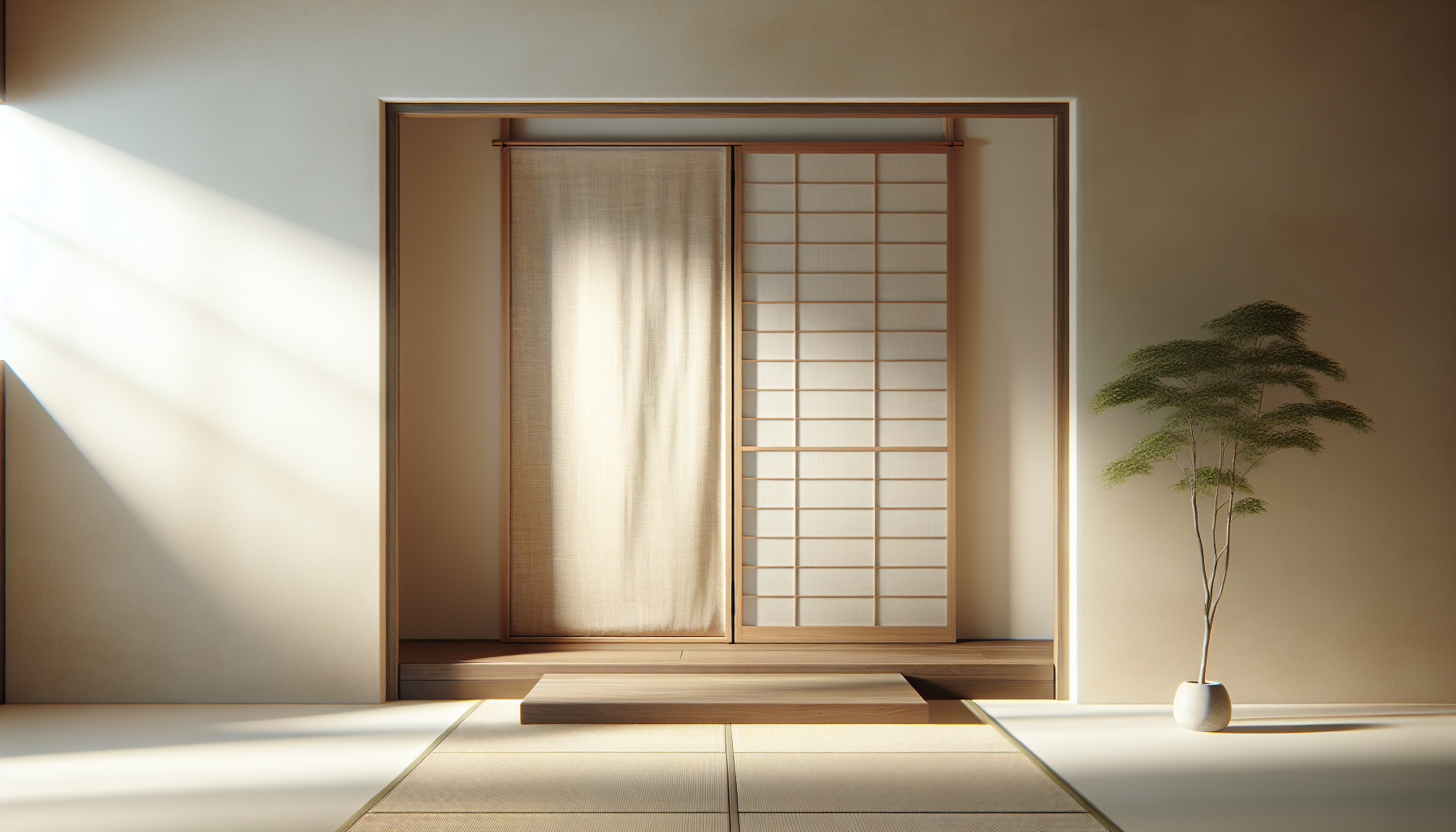
Door types and thresholds are powerful connectors. Sliding doors, shoji screens, or simple framed openings maintain visual permeability between rooms while allowing privacy. You’ll prefer doors with minimal trim and natural materials to reinforce the Japandi sensibility.
When closed, doors should still read as part of the overall palette. Consider matching interior door finishes to furniture wood tones or wall finishes to maintain cohesion.
Openings and partial partitions
Half-partitions or low dividers keep spaces connected while providing functional separation. You can use purposefully low shelving, simple screen dividers, or built-in benches to mark a transition without closing off light or sightlines.
Lighting strategy: layering for continuity
Lighting continuity keeps mood consistent from room to room. You should plan a layered approach: ambient, task, and accent lighting in each space. Fixtures should share common design cues such as matte black or warm brass accents and simple geometric forms.
- Ambient: Recessed lighting, slim pendant clusters, or paper lanterns for soft general light.
- Task: Under-cabinet kitchen lights, bedside reading lamps, and directional spots where work happens.
- Accent: Wall washers, focused uplights, and small point lights to highlight texture and art.
Natural light as the primary element
Maximize daylight and orient spaces to capture it. You’ll use translucent window treatments like linen sheers or shoji screens to diffuse light and maintain privacy while keeping brightness consistent. Natural light ties rooms together more powerfully than any artificial source.
Furnishings: balanced scale and repeated motifs
Furniture should be low, lean, and well-proportioned. You’ll favor simple silhouettes with visible joinery or light metal accents that nod to both Japanese and Scandinavian traditions. Use repeated motifs—similar legs, tapered profiles, or consistent wood tones—across rooms to reinforce cohesion.
Avoid heavy, oversized pieces that break sightlines. Choose multi-use furniture that maintains calm and supports flow, such as benches with storage or dining tables with flexible seating.
Proportion and negative space
You should allow breathing room around furniture. Negative space is as intentional as objects in Japandi design because it highlights craftsmanship and keeps rooms functional. Maintain consistent margins—clearance around a sofa or dining chairs—that make movement predictable and comfortable.
Textiles and soft elements
Textiles add warmth and softness without overwhelming the minimalist palette. Choose natural fibers like linen, cotton, and wool in muted tones. You’ll use cushions, throws, and curtains sparingly but with quality.
Pattern should be subtle—a soft stripe, a simple weave, or natural irregularities—so that textiles harmonize rather than dominate. Repeat a textile color across multiple rooms to create continuity.
Art, objects, and curated minimalism
You should curate objects slowly, selecting pieces that feel personal and crafted. One or two sculptural objects per room are usually enough. Artwork should be simple, framed in thin profiles, and hung at a consistent height for coherence.
Groupings across rooms work well: a ceramic bowl on the kitchen counter, a similar clay form on the living room console, and a small sculptural object on a bedroom shelf create invisible links.
Plants and natural elements
Plants are a subtle and effective way to connect rooms. You’ll use a small number of well-chosen plants—bonsai, snake plants, or ficus—placed deliberately to break planes and add life. Natural branches or dried florals also work when you want low-maintenance options.
Place plants where they can be seen from multiple rooms to reinforce continuity and bring nature into your circulation paths.
Storage, clutter control, and visual order
Hidden storage preserves the minimalist aesthetic and keeps transitions uncluttered. You should rely on built-in cabinetry and multi-functional furniture to keep everyday items out of sight. The goal is to see intentional surfaces and calm lines as you move through spaces.
Create dedicated storage zones near functional areas—entry bench with shoe storage, kitchen drawers for utensils, concealed laundry baskets—to avoid visual spillover between rooms.
Room-by-room strategies
You’ll find specific tactics for connecting each pair of rooms below. The aim is to apply the principles above in practical ways.
Entry to living area
Your entry is the threshold and sets the tone. Use durable wood or stone flooring that matches the adjacent living area to create immediate continuity. A small bench with a simple woven rug and a low shelf for keys helps define the entry without visual clutter.
Keep the entry palette aligned with the living room—same wall tone, same wood finish—to make the progression feel natural and intentional.
Living to dining
You should treat the living and dining area as a single social zone with zoned function. Align furniture axes: a dining table parallel to the sofa or sharing a common focal wall helps create rhythm. Use the same pendant light family or similar finish to connect both zones.
Rugs can define each zone while remaining complementary—similar tones and textures rather than starkly different patterns.
Dining to kitchen
When the dining area meets the kitchen, aim for material continuity. You’ll echo the dining table wood in kitchen cabinet faces or open shelving. Keep hardware and fixture finishes consistent—if matte black is used in the kitchen, coordinate dining lighting or cabinet pulls in the same finish.
A single countertop material or a repeated tile motif can tie the two spaces together visually.
Kitchen to service spaces (pantry, laundry)
Functional areas should feel like the logical extension of the kitchen. Use consistent cabinetry styles and continuous countertops when possible. Keep doors minimal and hardware restrained so service spaces feel integrated rather than afterthoughts.
Living to bedroom
Bedrooms should feel quieter but still connected to the home’s language. You’ll soften the palette slightly and add more textiles, but maintain wood tones and lighting styles that match public spaces. Consider a low-profile door or a shoji-style screen to transition while retaining light and material coherence.
Bathroom transitions
Bathrooms often require different materials for moisture control, but you can still tie them to other rooms through wood accents, consistent metal finishes, and a repeated neutral paint tone. Use stone flooring that complements your main floor or incorporate a wooden threshold to bridge the materials.
Hallways and transitions
Hallways are the connective tissue of your home and should read like curated galleries. Keep them uncluttered, aligned, and well-lit with repeated lighting fixtures or a consistent runner rug. Simple built-in niches or a single console table can punctuate hallways without creating distraction.
Open plan vs. defined rooms
You’ll balance openness and privacy based on your lifestyle. Open plans encourage visual cohesion easily, but you should use furniture arrangements, rugs, and low partitions to define spaces. In homes with defined rooms, maintain a consistent material and color strategy so doors feel like soft transitions rather than abrupt changes.
Flexible solutions such as sliding panels or pocket doors provide you with the ability to open and close connections as needed.
Small spaces and multi-function rooms
When space is limited, consistency becomes even more important. Choose a single flooring material and repeat your palette through small rooms. Use foldable or nesting furniture, and ensure sightlines remain uncluttered to make the area feel larger and more cohesive.
A clear, repeatable set of finishes (e.g., same wood tone, same metal) does a lot of heavy lifting in making small spaces feel unified.
Accessibility, durability, and daily life
Japandi aesthetics should support how you live. Choose finishes that are durable and easy to maintain, particularly in high-traffic areas. You’ll pick washable textiles, scratch-resistant flooring, and robust hardware that keeps functionality without compromising the aesthetic.
Plan circulation clearances—door widths, turning radii, and unobstructed paths—so the home is comfortable and future-proof.
Lighting plan table: guide to harmonized illumination
Use this table as a basic lighting guide across rooms to maintain a consistent approach:
| Room | Ambient | Task | Accent | Recommended fixture styles |
|---|---|---|---|---|
| Entry | Soft overhead or pendant | – | Spotlight for art | Paper lantern, simple pendant |
| Living | Dimmable ambient | Reading lamp | Uplight for texture | Low-profile floor lamp, pendant |
| Dining | Central pendant | – | Wall washers for art | Long linear pendant, warm finishes |
| Kitchen | Recessed or flush mount | Under-cabinet strip | Pendant over island | Matte metal pendants, warm LED |
| Bedroom | Soft ambient | Bedside lamp | Accent shelf light | Small, sculptural fixtures |
| Bath | Bright task over sink | Mirror task lights | Niche lighting | Water-safe matte fixtures |
Maintaining a consistent fixture language makes light feel like part of the home’s visual vocabulary.
Materials and finish combinations: safe pairings
You’ll benefit from tested material pairings that reliably read as Japandi. Use this quick reference to mix finishes without overcomplicating the scheme:
| Primary material | Complementary finishes | Use case |
|---|---|---|
| Light oak | Matte black metal, linen textiles | Living, dining, kitchen accents |
| Warm plaster walls | Ash wood, pale stone | Bedrooms and hallways |
| Natural stone | Soft wood, warm brass | Entry, kitchen countertops |
| Dark-stained wood (accent) | Light plaster, muted green | Feature furniture, shelving |
| Paper/shoji | Soft wood frames, wool rugs | Dividers, lamps, privacy screens |
Repeating these pairings across rooms simplifies decision-making and ensures cohesion.
Common mistakes to avoid
A few pitfalls can undermine the cohesion you’re aiming for. Avoid too many competing wood tones, excessive contrasting colors, and random patterns. Be careful with scale—oversized furniture can break sightlines and unity.
Also avoid over-accessorizing. In Japandi design, each accessory should have a purpose or emotional value. Having many small, unrelated objects will fragment the visual flow.
Budgeting and phasing your project
You can achieve cohesion gradually. Prioritize permanent elements first—flooring, wall finishes, lighting, and major furniture. Use lower-cost textiles and accessories to refine the look as you go. You’ll find that consistent, well-chosen investments in key pieces save money long-term by avoiding frequent replacements.
Phase plan example:
- Phase 1: Flooring, paint/plaster, key lighting
- Phase 2: Main furniture (sofa, table, bed)
- Phase 3: Window treatments, rugs, storage solutions
- Phase 4: Art, plants, accessories
Maintenance and seasonal updates
To keep cohesion, maintain consistent care routines and update textiles seasonally to refresh feel without changing the core palette. You’ll rotate throws and cushions or swap a rug to subtly adjust warmth and texture for different seasons.
Regular maintenance of wood finishes and textiles will keep the materials aging gracefully, which is central to the Japandi aesthetic.
Practical checklist for connecting rooms cohesively
Use this checklist as a practical guide during planning and execution:
| Item | Action |
|---|---|
| Palette | Limit to 4–6 recurring colors; repeat across rooms |
| Materials | Choose 3 primary materials used throughout |
| Flooring | Keep flooring continuous where possible |
| Furniture | Maintain similar scale and leg style across rooms |
| Lighting | Use consistent fixture finishes and layered approach |
| Sightlines | Align axes; keep circulation unobstructed |
| Storage | Use built-in or hidden storage to reduce clutter |
| Thresholds | Use simple, material-matching thresholds |
| Textiles | Repeat textile tones with subtle variation |
| Plants | Place plants visible from multiple rooms |
| Hardware | Keep metal finishes consistent |
Work through the list room by room to ensure nothing is overlooked.
Final thoughts and next steps
You’re building more than a collection of pretty rooms—you’re creating a home that breathes with calm and intention. The keys are repetition, restraint, and the thoughtful use of materials and lighting. By establishing a short list of trusted colors, textures, and furnishings, you’ll create a living experience that feels unified and deeply comfortable.
Start by defining your core palette and materials, then plan flooring and lighting to bridge rooms visually. From there, layer furniture, textiles, and curated objects with restraint. If you follow these principles, your Japandi home will feel cohesive, functional, and quietly beautiful.
If you’d like, you can share floor plans or photos and I’ll give specific suggestions for connecting particular rooms in your home.