
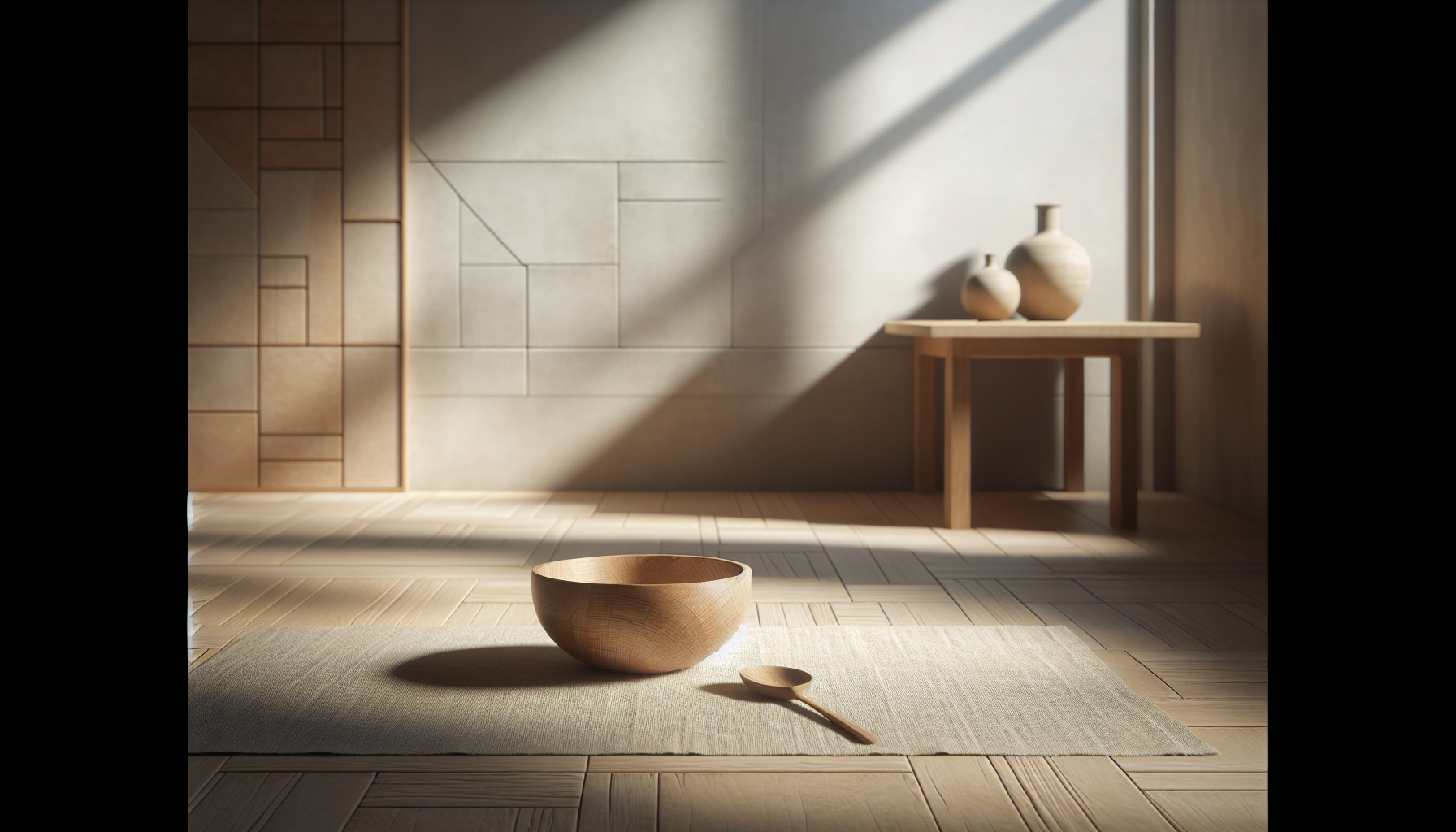
Have you ever noticed how much lighter you feel when a surface is cleared and a room breathes?
Really Embracing Fewer Possessions Can Free Space
You can create more physical and mental space by intentionally owning less. This article explains what it truly looks like to embrace fewer possessions, how that approach relates to the popular Japandi aesthetic, and practical steps you can take to make meaningful, lasting change.
What “Really Embracing Fewer Possessions” Means
When you embrace fewer possessions, you move beyond occasional tidying and toward a lifestyle of intention. It’s about choosing items for usefulness, beauty, or meaning rather than accumulating by habit, impulse, or obligation.
You don’t aim for empty rooms; you aim for a home where every object has a purpose or brings you joy. That clarity reduces visual noise and makes your space more functional and calming.
Intentional living vs. minimalism
Intentional living focuses on values — the reasons behind what you keep or buy. Minimalism emphasizes reducing quantity and distraction. Both approaches overlap, but you can adopt a minimal wardrobe or apply intentional ownership selectively to areas that matter most to you.
You can let the principles guide you rather than require total austerity. The result is a lighter space and more deliberate daily choices.
What People Think Japandi Really Means
Many people equate Japandi with a sparse, museum-like interior: monochrome, cold, and almost sterile. You might imagine rigid minimalism with no personality — just smooth surfaces and empty corners.
In reality, Japandi is a harmonious blend of Japanese simplicity and Scandinavian warmth. It favors clean lines and uncluttered spaces, but it also values natural materials, handcrafted objects, and cosiness. That balance helps you reduce possessions while keeping spaces inviting.
Origins of Japandi
Japandi combines Japanese wabi-sabi — the appreciation of imperfection and transience — with Scandinavian hygge principles like comfort and conviviality. The fusion produces interiors that are restrained yet warm, purposeful yet comfortable.
Understanding that background helps you see why Japandi encourages fewer, better things rather than complete asceticism.
Common misconceptions
People often misunderstand Japandi by focusing on the visual template instead of the philosophical core. Misconceptions include believing the style requires expensive designer pieces, that it excludes color or textiles, or that it mandates complete emptiness.
You can adopt Japandi principles at any budget or scale by prioritizing function, quality, and natural materials.
Perception vs. Reality: Japandi and Fewer Possessions
This table helps you compare common assumptions about Japandi and what it actually stands for.
| What people think Japandi means | What Japandi actually emphasizes |
|---|---|
| A cold, minimalist showroom | Warmth through texture, natural materials, and light |
| Only expensive designer furniture | Simple, well-made, durable, and often modest pieces |
| No color or personal items allowed | Muted palettes with curated accents and meaningful objects |
| Must remove most items to achieve style | Selective editing: keep fewer items but make them purposeful |
| A single visual formula for all homes | Adaptation according to function, climate, and personal taste |
Benefits of Embracing Fewer Possessions
Owning fewer things will impact your life in multiple ways. You’ll likely notice benefits in time, money, clarity, and environmental footprint.
These changes aren’t immediate miracles, but consistent choices compound quickly and make daily living easier and more satisfying.
Mental and emotional benefits
Less clutter reduces decision fatigue and mental friction. When surfaces are clear and routines are simpler, your mind can focus better, and stress levels often fall.
You’re also likely to form stronger attachments to the objects you keep, because those items are chosen deliberately rather than collected by default.
Physical and spatial benefits
Fewer possessions free physical room for flow, function, and more intentional design. You’ll see more floor, clearer countertops, and easier cleaning. That physical openness often translates into actual usable space — an extra chair, a small workspace, or a reading nook.
You also reduce the need for storage furniture or external storage units, which can save money and space in the long run.
Financial benefits
When you buy less and buy better, you usually save money over time. You’ll spend less on replacements and impulse purchases and more on quality items that last. Additionally, you can recoup funds by selling or donating items you no longer need.
Reducing possessions changes your relationship to consumption — making it less about filling space and more about meeting real needs.
Environmental benefits
Owning fewer items lowers your resource footprint. You’ll consume fewer goods, require less packaging, and produce less waste. Prioritizing durable, repairable items reduces the strain on raw materials and landfill systems.
Small changes in purchasing behavior can have big cumulative impacts for sustainability.
How Embracing Fewer Possessions Frees Physical Space
Freeing space isn’t just about throwing things away; it’s about systems, habits, and design choices that prevent re-accumulation. You’ll take steps that make the new reality easier to live with daily.
Think of it as a three-part process: decide what matters, create functional storage for what remains, and implement habits that prevent clutter from returning.
Principles to guide what you keep
Use clear principles to avoid emotional overwhelm when deciding. Common rules include asking whether an item is useful, beautiful, or meaningful. If it doesn’t meet any of those, consider letting it go.
You can also assess frequency of use, replaceability, and whether an item duplicates something you already own.
The “one in, one out” rule
A simple habit to prevent growth is “one in, one out.” For every new item you bring into your home, remove one that serves a similar function or that you no longer love.
This rule keeps your number of possessions stable and forces you to make tradeoffs rather than accumulate passively.
A Quick Decision Table for Decluttering
This table gives you straightforward questions to ask about an item when deciding to keep, store, or discard it.
| Question to ask | If yes | If no |
|---|---|---|
| Do you use it at least once a month? | Keep or store accessibly | Consider donating or discarding |
| Does it function well and meet your needs? | Keep or repair | Repair if valuable, otherwise discard |
| Does it bring emotional value or meaningful memories? | Keep a small selection | Photograph and let go of the rest |
| Is it easily replaceable or inexpensive? | Consider discarding | Keep if irreplaceable or valuable |
| Does it duplicate another item you use? | Keep your favorite, discard the rest | Keep unique items only |
Design and Aesthetic: Japandi as Functional Minimalism
You can make fewer possessions look intentional by applying design principles that emphasize balance, texture, and proportion. Japandi isn’t about emptiness; it’s about clarity.
Focus on neutral palettes, natural materials, and a limited number of accents so your remaining items feel curated rather than scarce.
Natural materials and textures
Wood, linen, cotton, stone, and simple ceramics bring warmth and tactility to a pared-back space. Textures add depth and prevent rooms from feeling flat.
You’ll see that mixing finishes and textiles creates interest without requiring extra objects.
Negative space and visual breathing room
Negative space — the areas you intentionally leave unfilled — is as important as the items you keep. It helps the eye rest and highlights the objects that remain.
Think like a gallery curator: fewer, well-placed items often make a stronger visual impact than many scattered pieces.
Practical Tips to Make Fewer Possessions Feel Intentional
A few styling and storage tricks make a big difference in how your fewer items read in a room. These approaches increase perceived value and comfort.
You can lean on functional furniture, multisensory elements, and curated groupings to make spaces feel finished and warm.
Grouping, rotation, and focal points
Create small vignettes: pair a plant, a piece of art, and a functional object to form a cohesive focal point. Rotate items seasonally to keep interest without adding volume.
Fewer, intentional groupings make each object feel more significant.
Multi-functional furniture and built-in storage
Choose furniture that doubles as storage — benches with compartments, coffee tables with drawers, or beds with integrated storage. These pieces allow you to hold necessary items without visible clutter.
When everything has a place, it’s easier to keep surfaces clear.
Room-by-Room Guide to Reducing Possessions
Different rooms invite different strategies. Here are targeted suggestions for common spaces to make the process manageable and effective.
Living room
Ask what you need in the living room: seating, a surface for coffee, lighting, and perhaps media. Let books and décor be intentional: display favorites and store or donate the rest.
Use closed storage for items you need but don’t want on display, like remote controls, board games, or extra blankets.
Bedroom
Prioritize sleep and relaxation. Keep bedside surfaces minimal: a lamp, a book, and perhaps a meaningful object.
Declutter clothing using a capsule approach — a smaller, versatile wardrobe that fits your lifestyle and reduces overflow into the bedroom.
Kitchen
Kitchens collect duplicate tools and rarely used gadgets. Keep only the tools you use weekly, store seasonal or rarely used appliances elsewhere, and donate duplicates.
Group similar items, use vertical storage, and label containers to make maintenance easier.
Bathroom
Bathrooms are ideal for the one-in, one-out rule. Dispose of expired products, keep daily essentials within reach, and store backup items in a single, labeled cabinet.
Minimal surfaces make cleaning faster and the space feel spa-like.
Home office
Keep work tools to what you need for productivity. Digitize documents where possible and adopt a simple filing system for the rest.
Limit decor to a few items that help you focus, such as a plant or a favorite print.
Entryway
The entryway should keep daily essentials accessible: keys, shoes, coats. Use hooks, a small bench with storage, and a tray for small items to prevent clutter buildup.
A regular sweep of shoes and outerwear prevents seasonal overflow.
Quick Actions by Room: At-a-Glance Table
Use this table when you feel overwhelmed and need concrete next steps per room.
| Room | Quick purge action | Storage solution |
|---|---|---|
| Living room | Remove 50% of non-essential decor | Closed cabinets, hidden baskets |
| Bedroom | Create a capsule wardrobe and donate extras | Under-bed boxes for seasonal items |
| Kitchen | Clear utensils and appliances you haven’t used in 6 months | Wall hooks, vertical racks |
| Bathroom | Throw out expired cosmetics and duplicates | Single designated cabinet |
| Home office | Scan and shred old documents | One folder per active project |
| Entryway | Limit shoes to daily pairs, donate extra | Bench with storage or cubbies |
Creating Habits That Keep Your Home Minimal
Initial purges are only helpful if you maintain the changes. Habits replace decision fatigue with routines so clutter doesn’t creep back.
You’ll need small, repeatable practices rather than massive, infrequent efforts.
Daily, weekly, quarterly, yearly routines
Daily: Spend 5–10 minutes returning items to their home. Clear flat surfaces before bed.
Weekly: Do a short sweep for papers, dishes, or misplaced items. Laundry and replenishment tasks belong here.
Quarterly: Reassess seasonal items, swap textiles, and purge clothing that no longer fits or delights.
Yearly: A deeper audit — furniture, large decor, sentimental items — to ensure your home still reflects current needs.
Emotional Challenges and How to Overcome Them
Letting go can be emotional. Sentimentality, guilt, or family resistance may slow you down. You’re not alone if you feel attached to objects.
Address feelings with compassion and practical strategies that preserve memories without hoarding.
Strategies for sentimental items
Limit sentimental items to a curated collection. Photograph objects you want to remember but can’t realistically keep. Consider a memory box with strict size limits.
If family members resist decluttering, include them in the process and respect their attachments while setting shared rules for common spaces.
Decision rituals to ease letting go
Create small ceremonies when you release items: say a few words, take a photo, or make a short note about why the item mattered. Rituals provide closure and make the process meaningful rather than wasteful.
These practices help you emotionally separate from belongings while preserving memory and respect.
When to Keep Items: Frameworks for Decision Making
A flexible framework makes tough choices easier. You can use objective criteria that reflect your priorities and lifestyle.
These frameworks prevent endless second-guessing and help you act more confidently.
The four-question framework
Ask for each item:
- Do I use it regularly?
- Does it perform a unique function I need?
- Does it bring me consistent joy or meaning?
- Can it be replaced affordably if needed?
If the answer is “no” to most questions, consider donating, selling, or recycling the item.
Decision matrix for ambiguous items
A visual decision matrix can help. Place items into quadrants: keep, store, donate, discard. Use criteria like frequency of use and emotional value to determine placement.
This tool reduces decision paralysis by making the tradeoffs explicit.
| Frequency of use \ Emotional value | High emotional value | Low emotional value |
|---|---|---|
| High frequency | Keep and display | Keep, store accessibly |
| Low frequency | Keep limited, store carefully | Donate or discard |
Incorporating Japandi Principles Without Losing Warmth
Japandi gives you a blueprint for combining minimal possessions with coziness. You don’t need to remove personality to achieve serenity.
Focus on craftsmanship, texture, and a restrained palette to keep spaces inviting.
Using color, textiles, and plants
Muted colors with a few accent tones create harmony. Add textiles like throws, rugs, and cushions in natural fibers to bring warmth. Houseplants add life, improve air quality, and create a living focal point.
These elements let you keep fewer possessions while making your home feel lived-in and comfortable.
Curate rather than strip
Think of curation: choose a few special objects rather than eliminating all decor. A single handcrafted bowl, a small stack of beloved books, and a textured throw can create a complete feel without clutter.
Curation keeps your space personal and intentionally minimal.
How to Buy Less and Buy Better
Stopping accumulation means changing how you shop. You can favor quality, repairability, and multi-functionality over price or trend-driven consumption.
A few shifts in behavior lead to steadier, less wasteful patterns.
Practical purchasing rules
- Wait 30 days before major purchases to test whether you truly need them.
- Prioritize repairable and timeless pieces.
- Choose neutral basics that work with many outfits or rooms.
- Buy secondhand when possible to reduce resource use.
These habits reduce impulse purchases and make each acquisition more meaningful.
Borrow, rent, or share
For occasional needs (tools, party supplies, specialty cookware), borrowing or renting is often smarter than owning. Community libraries, tool libraries, and peer-sharing platforms can fulfill temporary needs without permanent storage.
Sharing items reduces your total possessions while still giving access when required.
Storage Solutions vs. Owning Less
Storage can be a false friend. While smart storage helps hide and protect items, it can also enable unnecessary accumulation.
Invest in storage for things you truly need; avoid using storage as a way to postpone decisions about items you rarely use.
When storage helps and when it hurts
Helpful storage: seasonal items, meaningful keepsakes limited in quantity, and essentials you use regularly but must protect.
Harmful storage: boxes of “maybe someday” items that never see daylight and keep clutter mentally unresolved.
Measuring Success: How to Know You’re Embracing Fewer Possessions
You’ll want markers to tell whether your efforts are working. Choose practical indicators that reflect daily life improvements.
These metrics focus on function, well-being, and sustainability rather than counting items.
Practical success indicators
- Less time spent cleaning and tidying.
- Fewer items moved from place to place (less “purgative spring cleaning”).
- Faster decision-making when getting dressed or finding kitchen tools.
- Reduced shopping frequency or fewer impulse purchases.
- Increased satisfaction with your living environment.
These changes often show up before you notice a dramatic drop in possessions because they reflect improved systems and habits.
Common Mistakes and How to Avoid Them
Even with the best intentions, some patterns sabotage progress. Recognizing common pitfalls helps you maintain gains.
You can stay realistic and compassionate if setbacks happen.
Mistakes to watch for
- Half-hearted purges that keep “maybe” boxes forever.
- Replacing clutter with new clutter (trading old decor for new).
- Using storage as procrastination instead of decision-making.
- Forcing a look that doesn’t suit your life just to meet a style ideal.
Avoid these by setting clear rules, giving items deadlines, and aligning changes with how you actually live.
Tools, Resources, and Next Steps
You don’t have to do it all alone. Tools and resources can support your decisions and sustain progress.
Simple apps, books, and community services make the process easier and more social.
Helpful tools and resources
- Decluttering or habit-tracking apps to schedule and record purges.
- Local donation centers and secondhand shops for easy giving.
- Repair cafes and mending classes to extend the life of items.
- Books on minimalism, intentional living, and Japanese/Scandinavian design principles.
Use tools that match your style and needs rather than following a one-size-fits-all plan.
Final Thoughts: Small Choices, Big Effects
If you’re thoughtful about what you own, you’ll likely find that fewer possessions do more than free physical space: they free time, attention, and mental bandwidth. Japandi teaches you a balanced approach that values minimalism with warmth, and that balance helps you keep what you love while letting the rest go.
Start small, be kind to yourself, and treat the process as an evolving practice rather than a single purge. The goal isn’t to own as little as possible — it’s to own what matters.